Youtube was founded on February 14th, 2005 by former PayPal employees Chad Hurley, Steve Chen and Jawed Karim.
Original Idea
The site we now all use to figure out how to set up Ikea furniture or to watch videos of dogs that sound like they’re speaking actually started as an idea for a dating site. This site, dubbed “Tune in Hook Up”, was supposed to be a version of HotOrNot, another dating site at the time, but the founders decided not to go that route.
The platform that we all know now came about a different way. Two events lead to its creation: firstly that Karim could not find any videos online of Janice Jackson’s Super Bowl wardrobe malfunction, and the second being that Hurley and Chen were unable to send a video from a dinner party they attended due to e-mail attachment limitations.
Beta Site
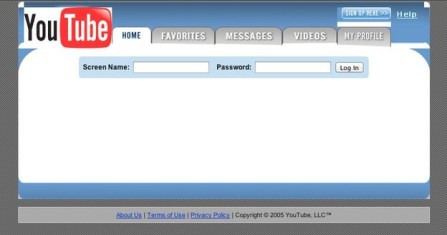
Youtube’s beta (trial) site was launched in May 2005. This is what its homepage looked like:
First Video
The first video posted on Youtube’s website came from one of the founders, Jawed Karim. It was titled “Me at the zoo” and was only 19 seconds long.
This video set the tone for what Youtube would become: a site where anyone can broadcast anything.
First Viral Video
In September 2005, this Nike ad garnered over one million views. It was a clip of Brazilian soccer player Ronaldinho receiving his pair of Golden Boots.
Launching out of Beta
Youtube finally launched out of beta on December 15th, 2005, following a $3.5 million investment from Sequoia Capital, giving the founders of Youtube enough money to increase it bandwidth, improve its servers and launch to the public.
Launching the “Content Verification Program”
In February 2006, NBC asked Youtube to take down a clip from Saturday Night Live titled “Lazy Sunday” because it was attracting a lot of attention to Youtube post-airing, so NBC was not receiving the views. This incited Youtube to create its Content Verification Program to help the rightful owners of videos remove those that infringe on their copyrights.
Google Buys Youtube
In October of 2006, when Youtube had only 65 employees, Google buys the company for ~$1.65 billion.
Partner Program
In May of 2007, Youtube launches their Partner Program, making it possible for people to profit odd of their videos.
Creating Stardom
Many people got their start on Youtube, including Justing Bieber who got his start through a Youtube video, which lead him to get signed by Usher in April of 2009.
Mainstream
In 2009, the 111th U.S. Congress launched the official Congressional Youtube channel. This helped American citizens attain a level of access to the government that was never before possible.
Vevo
In April 2009, Youtube and Vivendi teamed up to create Vevo, a music video service. They did this to try to repair links with music companies, which had complained about piracy and unfair licensing terms.
Movie Rental
In April 2010, Youtube entered into Neflix’s territory by having a film rental component, where viewers can pay a few dollars per film, with prices less expensive than Apple Movie but without access to more than 1 film for your money, like Netflix offers.
Live
In April 2011, Youtube introduced its “live” feature, where creators can stream live to their viewers. Since then, the Royal Wedding, the Olympics and even the Presidential Elections have been broadcasted on Youtube Live.
Today
Now, Youtube is still a massive phenomenon. After launching things such as Youtube Red, Youtube bring in billions of dollars annually.
 Morgan's Explorations in Cinema & Communications